Interaction Geography
A human-centered method for understanding spatial interaction
What is Interaction Geography?
A Visual Language for Understanding Space & Time
Interaction Geography combines embodied transcription, dynamic visualization, and multimodal data to explore how people and things move and interact across diverse indoor and outdoor settings.
Interaction Geography Slicer (IGS)
Hours of activity compressed into seconds — animated paths reveal patterns at a glance
Movement Patterns
See how people move through space over time
Spatial Analysis
Reveal how environments shape interaction
Conversation Flow
Connect talk to place — see where dialogue happens and how conversations move
Multimodal Data
Layer video, transcripts, and movement together
How It Works
From Source Material to Visualization
Choose a pathway based on what kind of data you have to visually explore diverse data over space and time
Video
Trace movement by hand from video using Mondrian, then visualize with IGS.
Indoor Tracking
Load position data from sensors or computer vision directly into IGS.
GPS
Import GPX, KML, or CSV from any GPS-enabled device — maps generated automatically.
Real-World Applications
See It in Action
Interaction Geography is being used across diverse settings, from classrooms to museums to virtual environments
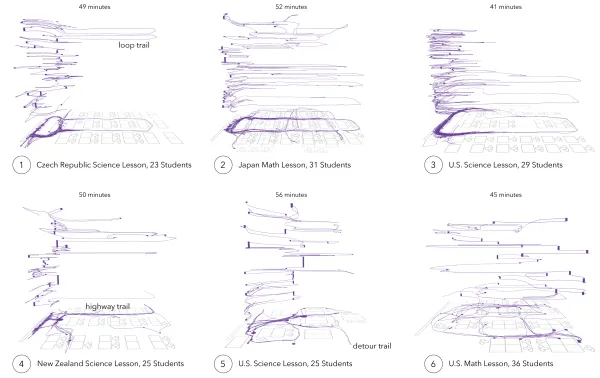
Classrooms
Explore secondary math teachers' movement and use of space across different classrooms and countries.
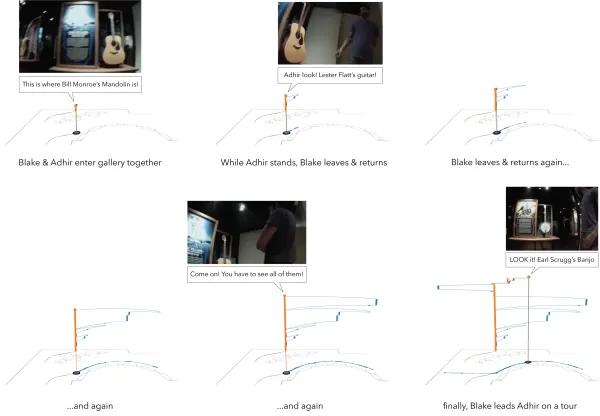
Museums
Visualize visitor interactions and movement patterns in a cultural heritage museum.
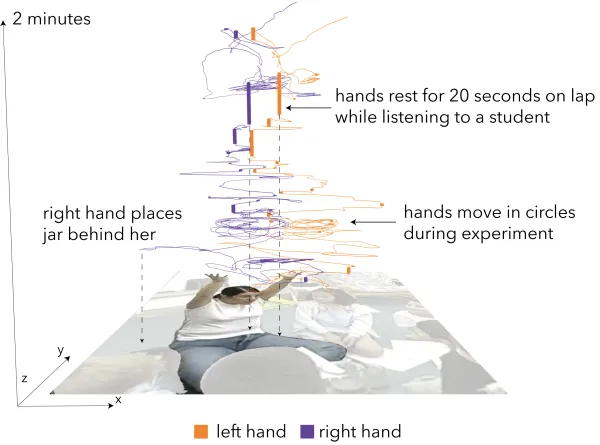
Early Childhood
Examine teacher and student gestures during elementary classroom activities.
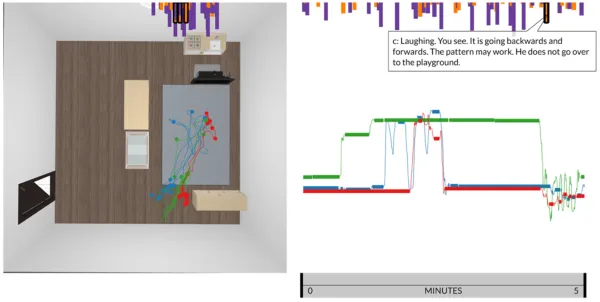
Computational Thinking
Visualize interactions between students, teachers, and robots in computational learning activities.